(Yes, it’s getting confusing. No, you’re not alone.)
If you’ve ever opened ChatGPT and paused at the dropdown menu that says “GPT-4,” “GPT-4o,” “Default,” “Turbo,” “Legacy” — you’re not broken. You’re just living in the age of too many models.
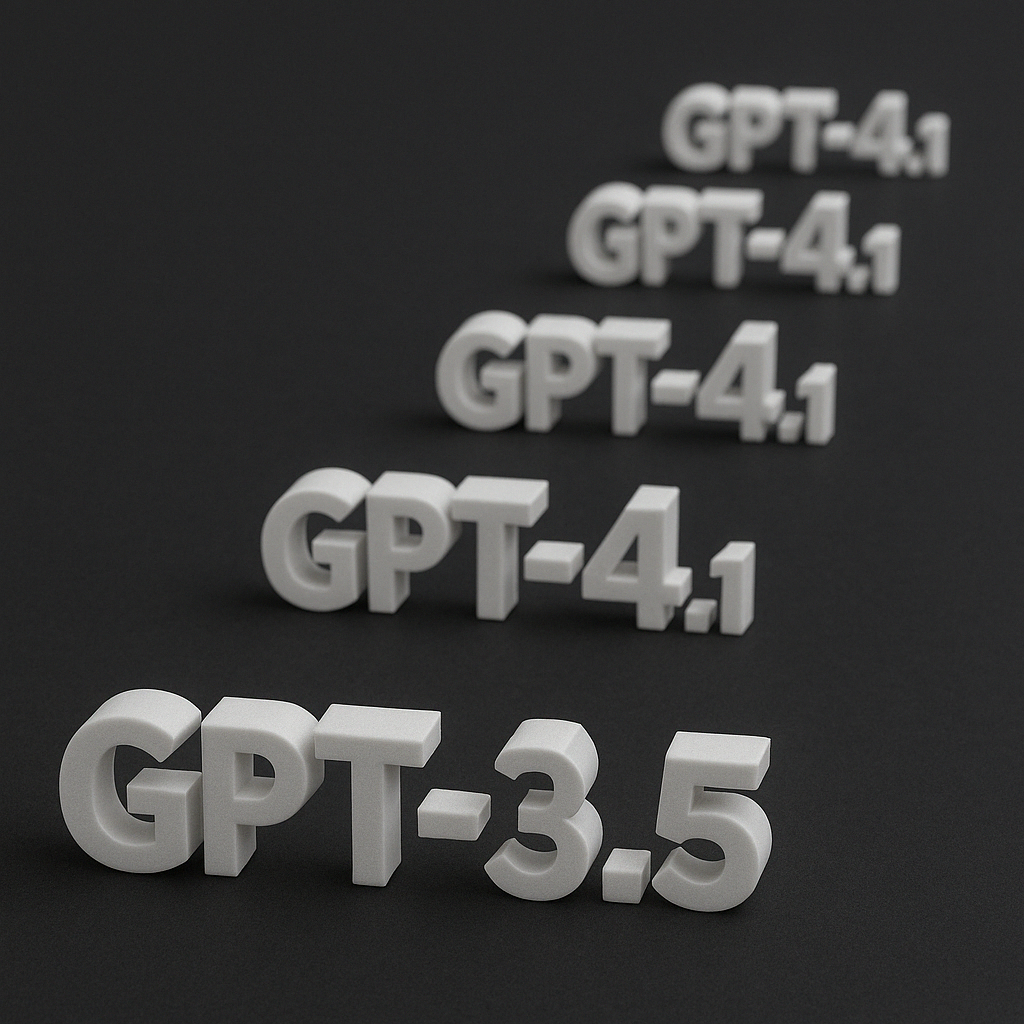
Let’s get something straight: you’re not supposed to know the difference between GPT-4, GPT-4.5, GPT-4o, or GPT-4.1 Mini Nano Max Ultra X. These model names weren’t designed for humans. They were designed for engineers, product teams, and API dashboards. But now, they’re spilling into our daily tech use like alphabet soup.
And for most users — even tech-savvy ones — this mess is starting to feel like choosing between 17 types of toothpaste. The branding is vague, the differences are subtle, and honestly, you’re left wondering: “Does it really matter which one I use?”
Spoiler: sometimes yes, but mostly… no. Here’s why.
The Model Mess: How We Got Here
OpenAI, Anthropic, Google, Mistral, Meta — they’re all in a race. Each release brings a new “state-of-the-art” model, often just a minor improvement dressed in a new name. This used to be exciting. Now it’s a bit exhausting.
We started with GPT-3. Then came GPT-3.5. Then GPT-4 dropped like a mic. Then came Turbo. Then 4o. Then 4.1. Then 4.1 Mini. Then… what?
The problem is that the naming convention hasn’t matured, but the tech has. Now we’re in a weird phase where product naming lags behind product complexity.
Let’s Decode the Core Models (You Only Need These 3)
- GPT-3.5 (Free Users)
→ Think of it like ChatGPT Lite. Quick, decent for everyday tasks. But it’s kind of like asking a smart intern to run your company. - GPT-4o (Pro Users)
→ This is the one you want to be using now. It’s fast, cheap, and actually smarter than GPT-4 in many ways. Handles images, audio, and long conversations like a champ. - GPT-4.5+ (API Only)
→ You’ll only need this if you’re building something deeply technical or scaling your own product with OpenAI’s backend. If you’re not coding or building an app, skip it.
No-BS Survival Guide
If you’re confused by model names, here’s your mental cheat sheet:
| Model | Use Case | Should You Care? |
| GPT-3.5 | Daily writing, summaries, free users | ✅ Simple tasks |
| GPT-4 | Legacy model, being phased out | ❌ Ignore now |
| GPT-4 Turbo | Mid-2024 faster GPT-4 version | ❌ Rebranded as 4o |
| GPT-4o | Default for Pro, best general use | ✅ Yes, definitely |
| GPT-4.5 / 4.1 | Only on API, for devs | ❌ Unless you’re building software |
| GPT-4.1 Mini/Nano | API efficiency & cost-saving | ❌ Not for consumers |
What We Actually Need: Simpler Names
Imagine if we called them this instead:
- GPT Basic
- GPT Pro
- GPT Builder
Or even better:
- Everyday GPT
- Smart GPT
- Top Mode GPT
OR.. 👇
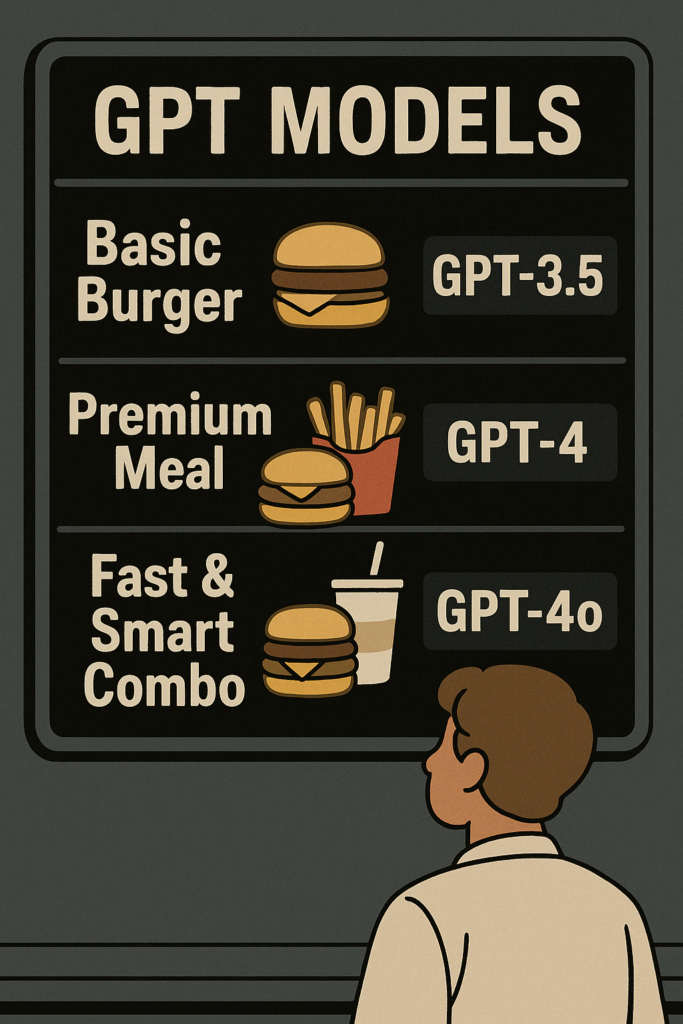
At the very least, OpenAI could start labeling based on what the model does, not just what it is. Right now, it feels like you need a PhD in promptology just to pick the right assistant.
🔚 Final Thoughts: It’s Not You. It’s the System.
If AI is supposed to be the future of usability, it needs to become… usable. The average person shouldn’t need to watch six YouTube explainers to know whether GPT-4.1 is better than 4o for helping with their essay.
Until then, here’s the truth:
Use GPT-4o if you have it. Forget the rest unless you’re a developer.
Everything else is marketing noise — and you’ve got better things to do.